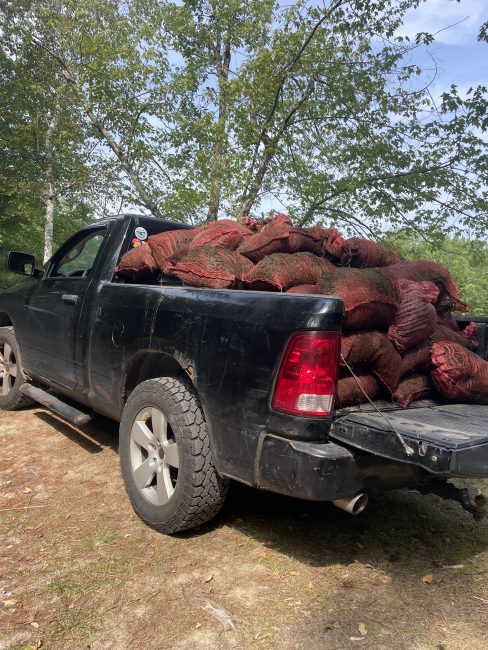
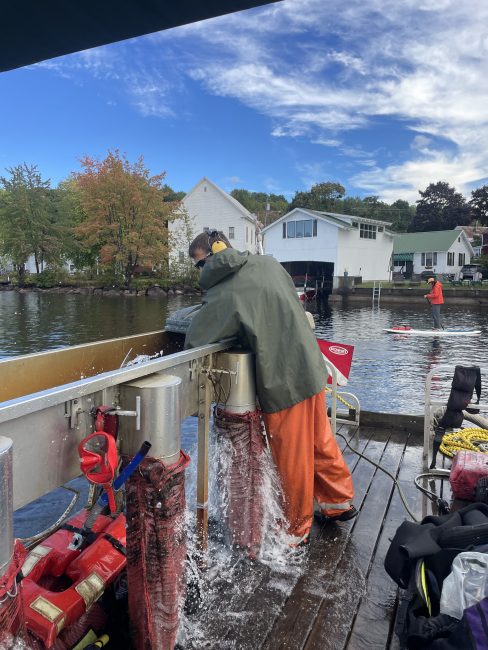
The 2025 field season for milfoil removal was incredibly productive. Our crews returned to Long Lake, Brandy Pond, the Songo River, Sebago Cove, and Sebago Lake to continue the battle against invasive Variable-leaf milfoil. We increased our number of divers this year by hiring 17 seasonal staff and added another full-time employee to the program to help with logistics and shoulder-season work. In total, our crew removed over 1,470 bags of milfoil and installed 237 benthic barriers.
Long Lake: Our crew continued work in Cape Monday Cove. In the small cove between Pine Point Road and Pitts Road, there has been significant improvement since 2023, when large monocultures were present. The other parts of Cape Monday continue to have sporadic plant growth and remain heavily monitored by our crew and interested landowners. Harrison Cove had heavy milfoil growth this season. Our crews found multiple large patches in depths of 10-12 ft. We laid numerous benthic barriers in Harrison and did multiple rounds of suction harvesting. We also worked around Plummers Landing, which has shown increased growth throughout the last few seasons. Other areas worked on include Bridgton Academy Cove, Salmon Point, and Mast Cove. Mast Cove continues to improve each season. Our crews removed over 105 (50-pound) bags from Long Lake this past summer.
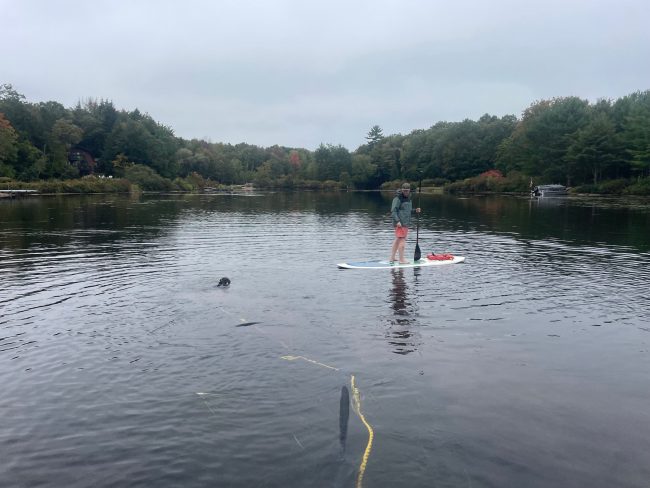
Brandy Pond: We started the season again by surveying the shoreline. We continue to work in the Songo Beach Association Marina, which has regular regrowth. We also found a large patch on the western shoreline that has been treated with barriers. Our team annually surveys the marinas located on Brandy Pond, as required by the Town of Naples ordinance. Our crews removed a little over 16 bags from Brandy Pond this summer.
Sebago: In Sebago, we again spent time working on Frye Island in both Long Beach Marina and Quail Cove. Our crew laid barriers at Long Beach Marina and conducted suction harvesting in both marinas. Please use caution around the launch in Long Beach Marina, as there are several barriers located there. In Kettle Cove, our crew returned for two days to remove sporadic growth throughout the marina and in the small river. We also spent time in the Northwest River, focusing on the public launch, and near the large set of association docks.
Songo River: In the Songo River, our crew was pleased to find that the main channel was relatively clear of milfoil, except for some sporadic patches. We started the season by surveying the main channel and several of the small coves. The State Park launch was the area that we spent the most time in this season. There were dense patches of milfoil throughout the launch, and despite suction harvesting this area multiple times and deploying over 40 barriers here alone, the regrowth persisted. Several of the small coves had consistent, dense growth throughout the season, which we were unable to fully address due to prioritizing our work around the busy boat launch. The Songo River Bayou also remains densely infested, and our crews spent around two weeks working there. In total, our crews removed over 636 bags from the Songo River.
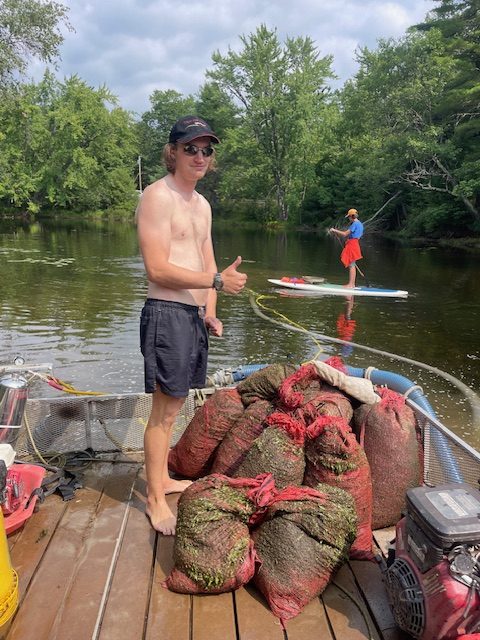
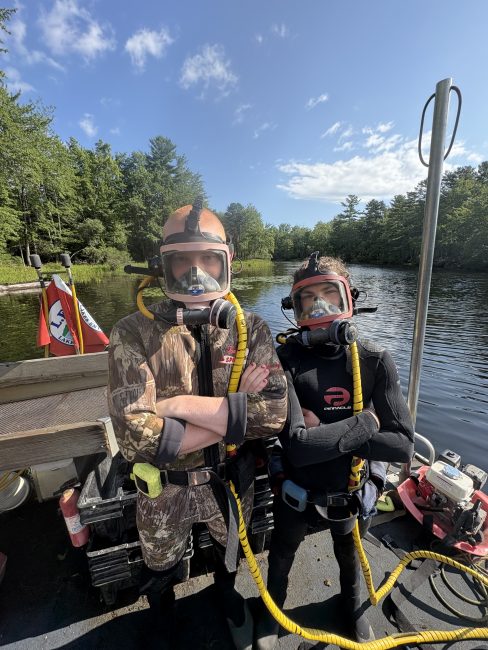
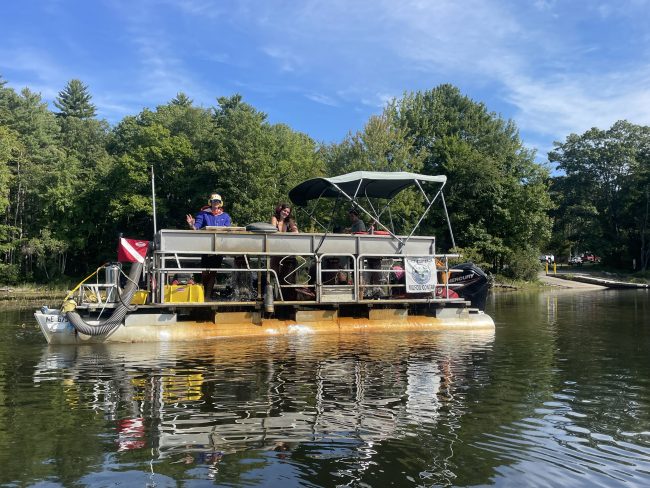
Sebago Cove: In Sebago Cove, LEA’s crew focused on the mooring fields, the southern channel, and the northern channel. We worked closely with the newly formed Sebago Cove Preservation Association, which contracted privately with New England Milfoil for additional removal in the northern channel and in front of residents’ homes. A new effort this year was the benthic barrier program, which allowed landowners to deploy barriers on their beachfronts. Landowners laid over 40 barriers as part of this initiative, and our crew removed over 371 bags.
While regrowth was a challenge this year, it was still an incredibly productive season. Next season, we plan to further grow the program with a larger crew and an additional suction harvester. This will allow us to work more around the heavily infested State Park Launch and Songo Bayou. Adding to our crew and building another harvester will be expensive, so please consider joining LEA or making an additional donation to our milfoil control work if you are already a member. If you have any questions, concerns, or would like more information on our program, please reach out to morgan@mainelakes.org.